

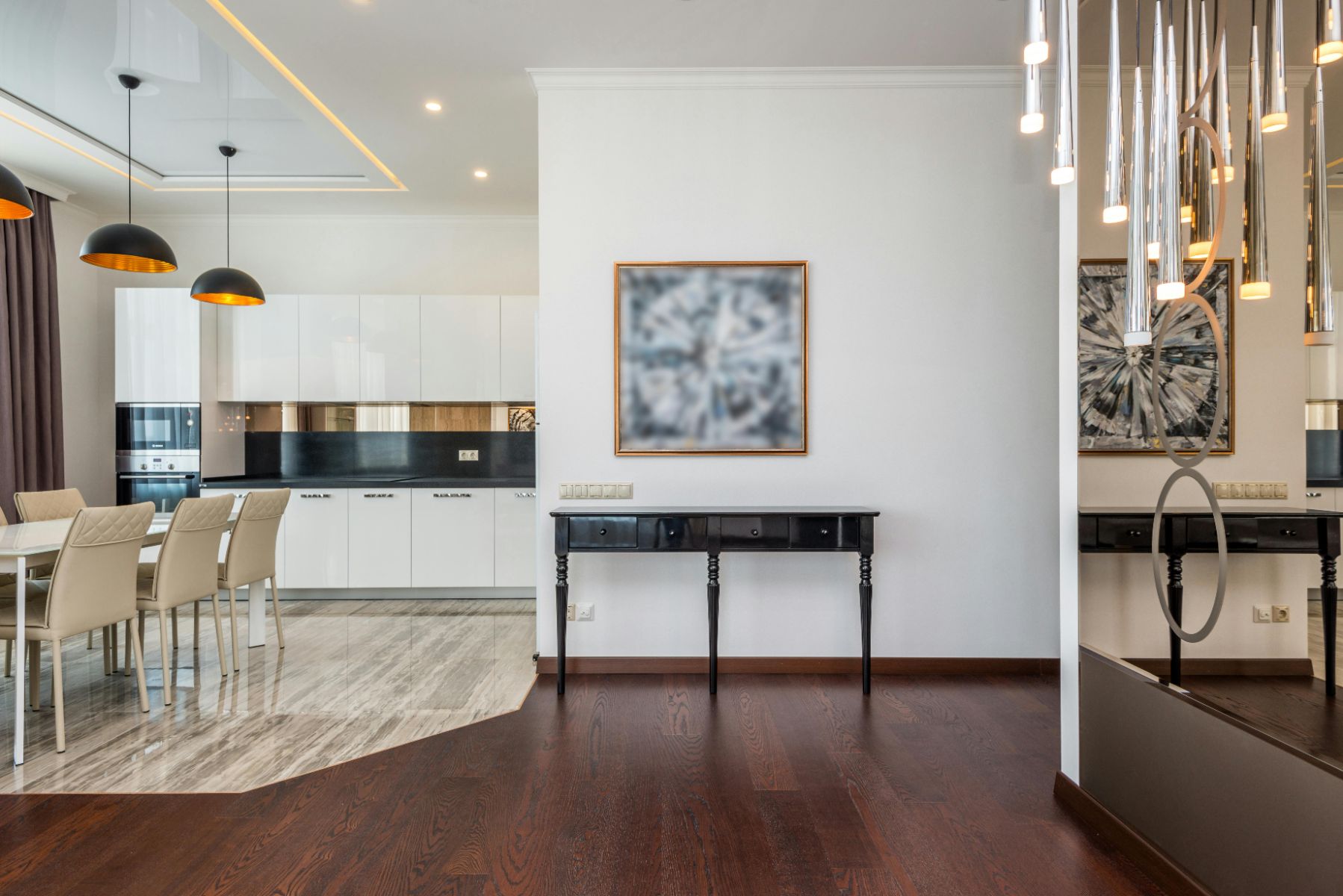
Walk into a thoughtfully designed home and you’ll notice something immediately, even if you can’t name it. The floors don’t compete. They communicate. Hardwood grounds the space. Tile defines purpose. Area rugs soften transitions and bring personality into the room. When used intentionally, these three materials don’t just coexist—they elevate one another.
Hardwood flooring often acts as the foundation of a home’s design. Its natural grain, warmth, and subtle variation create visual continuity that carries from room to room. In open-concept homes especially, hardwood provides a sense of flow that makes spaces feel larger and more cohesive. Lighter species open up smaller rooms, while deeper tones add richness and weight to expansive layouts.
Tile plays a different role. It’s practical, architectural, and purposeful. Tile signals where function matters most—kitchens, bathrooms, laundry rooms, entryways. But tile isn’t limited to utility. With today’s porcelain and ceramic options, tile can mimic stone, concrete, wood, and even textile patterns. It becomes a design feature, not just a surface.
This is where area rugs complete the picture. Rugs act as visual anchors. They soften hardwood underfoot, absorb sound, and define zones within open spaces. In dining rooms, rugs frame the table and chairs. In living rooms, they pull furniture together. In bedrooms, they provide warmth the moment your feet touch the floor. Rugs are also the easiest way to introduce color, pattern, and texture without committing to permanent change.
Layering these materials requires balance. A patterned rug works best over simple hardwood. Bold tile pairs well with neutral rugs. Size matters too—undersized rugs can make a room feel disconnected, while oversized rugs create comfort and cohesion. Texture plays its own role: plush rugs over smooth hardwood, flatweaves over busy tile patterns.
The real magic happens when transitions are seamless. Instead of abrupt changes, thoughtful flooring design uses thresholds, direction, and spacing to guide the eye. Hardwood planks might run lengthwise through living areas, while tile shifts orientation in kitchens for subtle separation. Rugs soften the boundary without interrupting flow.
At Precision Flooring & Design, this layered approach is at the heart of how floors are selected and installed. Every home has its own rhythm, and the right combination of hardwood, tile, and area rugs enhances both form and function. For homeowners in and around Norcross, GA, creating floors that feel intentional—not accidental—starts with understanding how these materials work together.


